Our Activity
“Annual Report 2023 on LAHORA”
Activities 2023

Condom Distribution for HIV/AIDS Prevention
To strengthen health and wellbeing among trans refugees, LHRA undertook a vital initiative in condom distribution. This program was carried out both independently by LHRA and in collaboration with partners such as Makerere’s Walter Reed Project, TASO Mulago, and Medical Teams International (MTI). By ensuring consistent access to condoms, LHRA directly contributed to limiting the spread of HIV/AIDS and other STIs within the community. This intervention not only safeguarded physical health but also promoted sexual rights and dignity, empowering individuals to make safer choices. The program’s impact extends beyond immediate health benefits. Condom distribution reduces the burden on healthcare systems by preventing new infections, while also aligning with global public health strategies for HIV prevention. Furthermore, by working with trusted partners, LHRA strengthened networks of care and advocacy, ensuring that marginalized groups are not left behind in the fight against HIV/AIDS. This initiative reflects LHRA’s holistic approach: combining community-led action with strategic partnerships to protect lives, uphold rights, and build a healthier, more resilient future for Trans refugees.
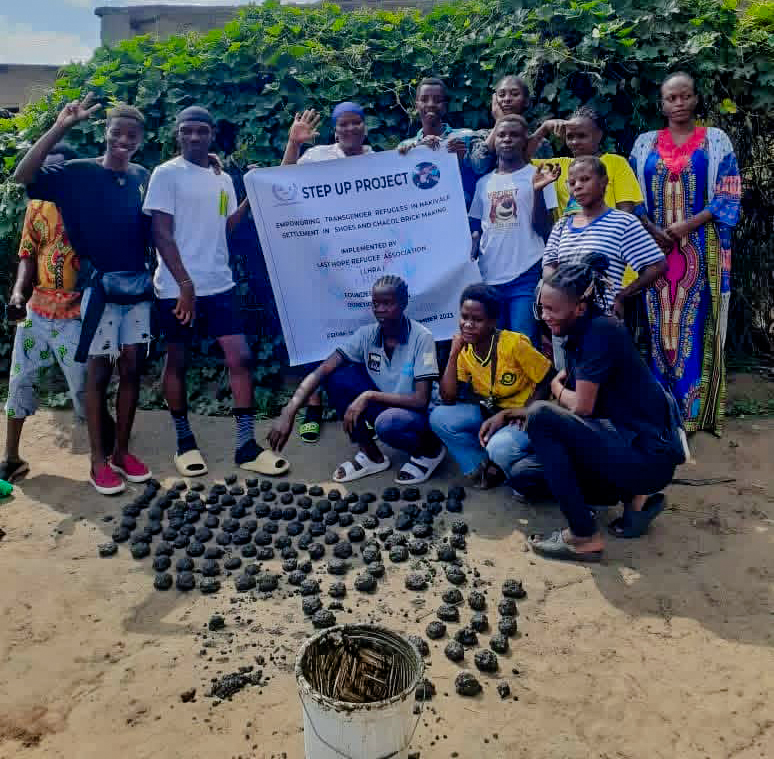
Sustainable Livelihoods Through Charcoal Briquette Training
In November 2023, LHRA organized a two-day intensive training course on charcoal briquette production using wood charcoal residue. The program was designed to equip LGBTQIA+ refugees with practical skills to establish income-generating activities through the sale of eco-friendly charcoal.
By transforming waste charcoal dust into durable briquettes, participants learned how to create a product that is not only marketable but also environmentally sustainable. Traditional firewood and charcoal contribute heavily to deforestation and carbon emissions, while briquettes made from residue reduce reliance on cutting trees, minimize waste, and burn more efficiently. This innovation directly supports climate change mitigation by lowering greenhouse gas emissions and promoting cleaner energy alternatives.
Beyond environmental impact, the training empowered participants with tools for financial independence, enabling them to meet daily needs, support their families, and reduce dependency on humanitarian aid. It also fostered social inclusion, as transgender refugees were recognized as contributors to both community well-being and environmental protection.
Through initiatives like this, LHRA demonstrates how livelihood projects can simultaneously address economic resilience, social dignity, and climate action, positioning marginalized communities as leaders in sustainable development.
Artisanal Sandal Production Workshop
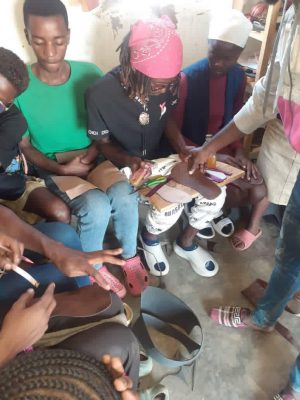
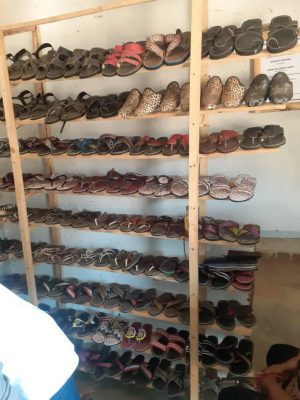
To promote financial freedom and self-reliance, LHRA organized a hands-on workshop on the artisanal production of sandals. This initiative equipped Trans refugees with practical vocational skills that can be easily applied in local markets, providing them with a sustainable source of income. By learning how to design and produce durable, affordable sandals, participants gained the ability to create products that meet everyday needs within refugee settlements and surrounding communities. The workshop not only fostered entrepreneurship but also encouraged creativity and innovation, enabling members to transform basic materials into valuable goods. This activity directly contributed to economic empowerment, reducing dependency on humanitarian aid and strengthening resilience. It also reinforced LHRA’s mission of positioning marginalized groups as active contributors to community development, proving that with the right tools and training, refugees can build pathways to dignity and independence.